

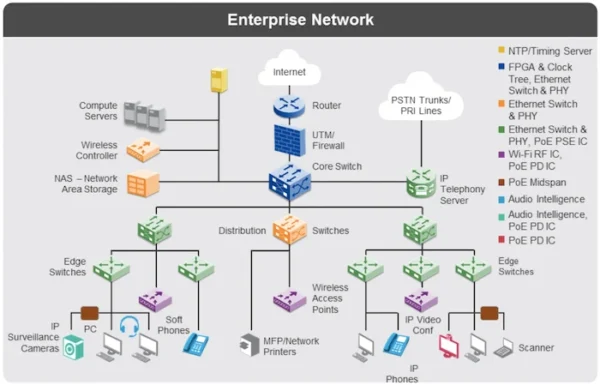
 Network and telecommunications services form the technical backbone of modern business operations. Every digital process – data exchange, cloud access, voice communication, remote work, and real-time collaboration – relies on the stability and performance of underlying network and telecom systems. According to engineering and telecommunications theory summarized in academic literature and Wikipedia, computer networks and telecom systems are foundational infrastructures comparable in importance to electricity or transportation.
For businesses, unreliable networking or poorly designed telecom architecture directly translates into downtime, productivity loss, and operational risk. As organizations become more distributed and cloud-dependent, professionally managed network and telecom services are no longer optional – they are essential.
Defining Network and Telecom Services
Network services encompass the design, implementation, operation, and maintenance of data communication systems. These include local area networks (LAN), wide area networks (WAN), wireless networks, routing, switching, firewalling, and secure connectivity to cloud platforms. Telecom services extend this scope to voice systems, carrier circuits, internet access, and unified communications.
From a technical perspective, both domains are governed by standardized communication models and protocols. The foundational concepts of packet switching, circuit switching, latency, bandwidth, and redundancy are extensively documented in telecommunications engineering and summarized in Wikipedia’s coverage of computer networking and telephony.
Networks as Systems of Reliability
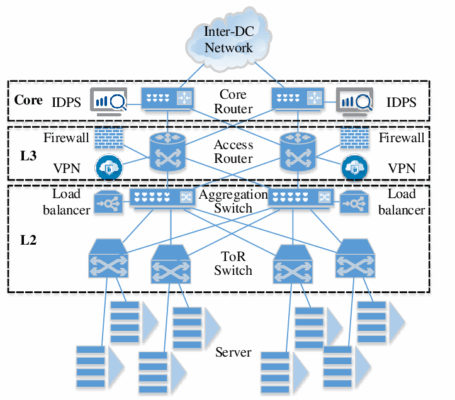 A business network is not a collection of cables and devices, but a complex system designed to deliver predictable performance under varying loads. Research in network engineering consistently shows that reliability is achieved through redundancy, segmentation, and controlled routing rather than raw bandwidth alone.
Professionally managed networks are designed to tolerate failure. Multiple paths, failover mechanisms, and traffic prioritization ensure that individual component failures do not result in total service disruption. These design principles are well-established in academic research and international telecommunications standards.
The Role of Telecommunications in Business Operations
Telecommunications enable real-time human and system-to-system communication across geographic boundaries. Voice over IP (VoIP), unified communications, and carrier-grade connectivity have replaced traditional analog systems in most business environments. This transition is well documented in telecommunications history and technical analysis referenced by Wikipedia.
Modern telecom services integrate voice, video, messaging, and data into unified platforms. This convergence improves efficiency but also increases dependency on network quality. Packet loss, latency, or jitter directly impact call quality and collaboration tools, making telecom performance inseparable from network design.
Security at the Network and Telecom Layer
From a cybersecurity standpoint, networks represent both a critical asset and a primary attack surface. Academic research and security analyses consistently show that many breaches exploit network-level weaknesses such as misconfigured firewalls, unsegmented traffic, or insecure remote access.
Managed network and telecom services address these risks through structured security controls, including segmentation, access control, encryption, and continuous monitoring. These practices align with principles of defense-in-depth described in information security literature and summarized in Wikipedia.
Performance, Latency, and Quality of Service
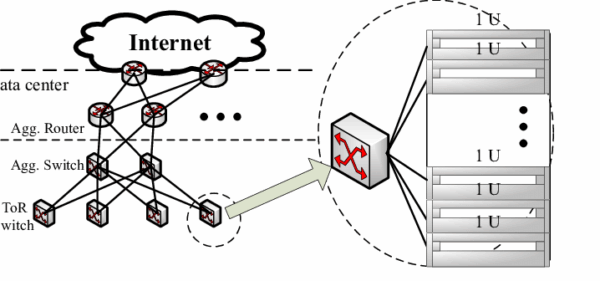 Network performance is not measured solely by speed. Latency, packet loss, and jitter are equally critical metrics, particularly for real-time applications such as voice, video conferencing, and cloud-based systems. Telecommunications engineering literature emphasizes that unmanaged traffic can degrade critical services even on high-capacity links.
Quality of Service (QoS) mechanisms allow networks to prioritize time-sensitive traffic. These mechanisms are formally defined in networking standards and are a core component of enterprise-grade telecom design. Without QoS, business-critical communications compete equally with non-essential traffic, reducing reliability.
Scalability and Geographic Distribution
As businesses expand across locations, their network and telecom requirements evolve from simple local connectivity to multi-site, geographically distributed architectures. Wide area networking, secure site-to-site connectivity, and carrier coordination become operational necessities.
Telecommunications theory and enterprise networking research demonstrate that scalable architectures depend on modular design and standardized interfaces. Managed services apply these principles to ensure that new offices, users, or services can be added without destabilizing existing operations.
Carrier Management and Vendor Neutrality
Network and telecom services often involve multiple carriers and service providers. Managing these relationships requires technical expertise and operational coordination. Misaligned service levels, inconsistent documentation, and fragmented responsibility are common causes of prolonged outages in unmanaged environments.
Vendor-neutral network management, a concept supported by industry research and summarized in technical encyclopedias, ensures that infrastructure decisions are based on performance and reliability rather than vendor dependency. This approach increases resilience and long-term flexibility.
Standards and Engineering Foundations
The development of modern network and telecom systems is grounded in international standards and formalized through decades of engineering research. These standards ensure interoperability, safety, and predictable performance across global networks.
Businesses that align their infrastructure with recognized standards benefit from compatibility, long-term support, and reduced operational risk. Deviations from these standards are a documented source of instability and technical debt.
Conclusion
Network and Telecom Services are not simply supporting technologies; they are mission-critical infrastructure. Scientific research, engineering standards, and decades of operational data confirm that reliable communication systems are essential to productivity, security, and business continuity.
For organizations specializing in IT management and services, such as DK’S Enterprises, Ltd., professionally managed network and telecom services represent a core responsibility. Without a well-designed, secure, and continuously managed network foundation, modern business operations cannot function reliably or scale sustainably.