

For modern businesses, data is a core operational asset. Financial records, customer information, intellectual property, operational systems, and communication platforms all depend on the availability and integrity of digital data. According to industry research and long-term observations summarized by academic studies and sources such as Wikipedia, data loss incidents are most often caused not by rare disasters, but by routine events: hardware failure, software bugs, misconfiguration, human error, and malicious activity. As a result, server and cloud backup strategies have become a fundamental component of professional IT management rather than an optional safeguard.
The Role of Backups in Business Continuity
Backup systems exist to support business continuity. Their primary function is not simply to store copies of files, but to ensure that critical operations can be restored within defined timeframes after an incident. This principle is formalized in widely accepted IT standards and frameworks, including disaster recovery planning and continuity management models described in academic literature and technical documentation.
Without structured backups, organizations face prolonged downtime, permanent data loss, regulatory exposure, and reputational damage. Multiple studies referenced by Wikipedia and vendor-neutral research bodies indicate that a significant percentage of small and mid-sized businesses fail to fully recover after major data loss events. This makes backup architecture a strategic decision, not a technical afterthought.
Server-Based Backup Systems
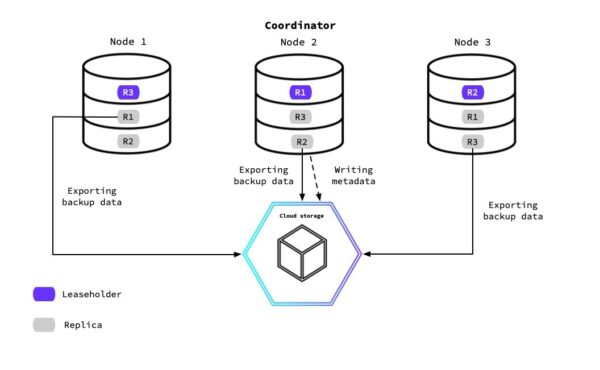 Server-based backups refer to systems where data is copied and stored on infrastructure directly controlled by the organization. This typically includes physical servers, network-attached storage (NAS), storage area networks (SAN), or dedicated backup appliances located on-premises or in private data centers.
The main advantage of server backups is control. Organizations maintain ownership over hardware, storage policies, encryption keys, and access permissions. Local backups also provide very fast recovery times, which is critical for systems that support real-time operations such as databases, internal applications, and file services.
However, server-only backup strategies have well-documented limitations. If backups are stored in the same physical location as production systems, they remain vulnerable to fires, floods, power failures, theft, or other site-level incidents. For this reason, industry best practices no longer consider single-location server backups sufficient on their own.
Cloud Backup Technologies
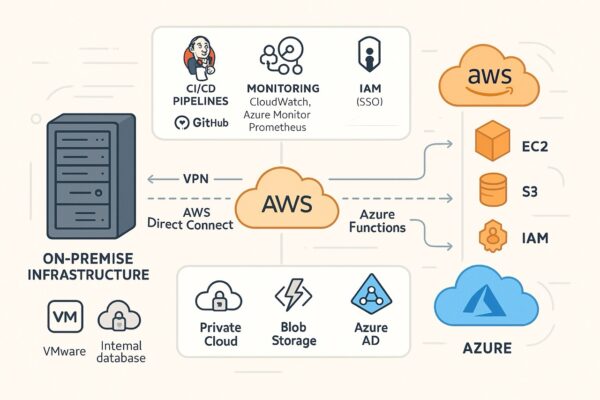 Cloud backup solutions store encrypted copies of business data in geographically distributed data centers operated by cloud service providers. These platforms are designed around redundancy, fault tolerance, and automated management.
From a scientific and engineering perspective, cloud backup systems rely on distributed storage models, replication algorithms, and integrity verification mechanisms. These concepts are well-documented in academic publications and summarized in technical encyclopedias, including Wikipedia’s coverage of distributed computing and cloud storage architectures.
The primary strengths of cloud backups include geographic separation, scalability, and automation. Data is stored outside the primary business location, reducing the risk of total loss. Storage capacity can be adjusted dynamically, and backup processes can run continuously or on defined schedules without manual intervention.
Hybrid Backup as an Industry Standard
Most professionally managed IT environments now use a hybrid backup model. This approach combines local server-based backups with off-site or cloud-based replicas. The rationale is supported by decades of operational experience and formalized in the widely recognized 3-2-1 backup rule.
The 3-2-1 principle states that organizations should maintain three copies of data, stored on two different types of media, with at least one copy located off-site. This model is referenced across vendor documentation, academic sources, and Wikipedia as a baseline for reliable data protection.
In practice, hybrid backups allow fast local recovery for common incidents while retaining cloud-based resilience against catastrophic events and ransomware attacks.
Security and Integrity of Backup Data
Backup systems must be designed with the same security standards as production systems. Research in cybersecurity consistently shows that poorly protected backups are a common target for attackers, particularly ransomware campaigns that attempt to encrypt or delete recovery data.
Effective backup security includes strong encryption during transmission and storage, strict access control, isolation of backup environments, and protection against unauthorized modification. Concepts such as immutable storage, which prevents data alteration for a defined retention period, are increasingly adopted and are documented in technical literature and industry analyses.
Recovery Objectives and Business Requirements
A scientifically grounded backup strategy aligns technical implementation with business requirements. Two standard metrics are used:
- Recovery Point Objective (RPO) – the maximum acceptable amount of data loss measured in time.
- Recovery Time Objective (RTO) – the maximum acceptable duration of system unavailability.
These concepts are well-established in disaster recovery theory and are described in both academic sources and Wikipedia. Different systems within the same organization often require different RPO and RTO values, depending on their operational importance.
Conclusion
Server and cloud backups are not simply technical tools; they are a foundational element of risk management and operational resilience. Evidence from industry research, academic studies, and long-term operational data shows that organizations with structured, tested backup strategies recover faster, incur lower financial losses, and maintain higher levels of trust with customers and partners.
For companies specializing in IT management and services, such as DK’S Enterprises, Ltd., backup and disaster recovery solutions represent a core responsibility. A properly designed backup architecture reflects established scientific principles, industry standards, and real-world operational experience. Without it, long-term business stability cannot be reliably achieved.