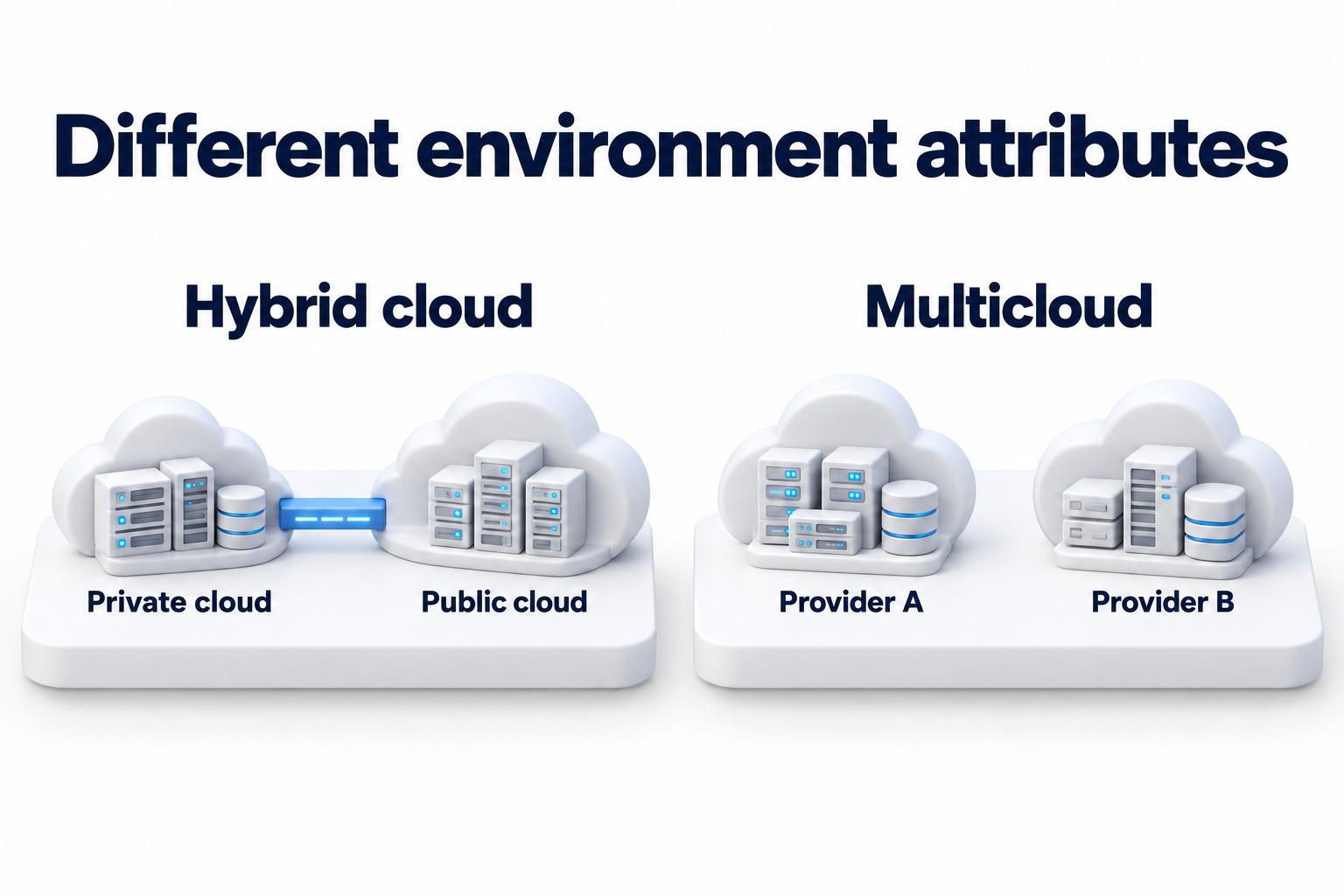
Hybrid cloud describes connections between different cloud environments. Multicloud means using services from at least two cloud providers. These attributes can coexist. A company can connect a private cloud to public services from two providers and use both approaches.
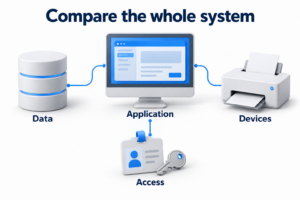
Start with the composition of your environment: where applications run, who provides cloud services, and which dependencies connect the systems. This description is more useful than choosing a label. It shows who needs to own access, connectivity, updates, and troubleshooting.
Separate three concepts first
A private cloud does not have to be in the office
A private cloud serves one organization. It can operate at the company or through an external operator. An ordinary office server does not automatically become a cloud. NIST's definition of cloud includes self service on demand, network access, a shared resource pool, elasticity, and measured use.
Clarify the actual model before comparing. A server running accounting software that an administrator configures manually can be called a local system. Do not label it a private cloud merely to create a presentation diagram.
A hybrid IT environment is broader than hybrid cloud
Under NIST's definition, hybrid cloud combines separate cloud infrastructures that remain distinct but connect through technologies enabling data and application portability. Linking a private cloud to a public cloud is a common example. You still need to design and test the specific portability mechanism.
Vendors may use the term more broadly. For example, AWS describes a hybrid model through a company's own data center and a cloud provider. Agree on terminology when discussing a project. In this article, a combination of ordinary local systems and cloud services is a hybrid IT environment. We use the strict cloud definition where it applies.
Multicloud counts providers, not servers
Two regions from one cloud provider do not by themselves create multicloud. Two providers create such an environment even when their applications do not exchange data. The label does not promise unified management, workload portability, or disaster failover.
Clarify what you count. A company may use one provider's cloud infrastructure and another's ready to use applications. For an overall inventory of cloud dependencies, that means multiple providers. For a server application migration project, distinguish infrastructure platforms from ready to use services. Using the latter does not imply application portability between them.
Compare models by operational tasks
|
Question |
Hybrid environment |
Multicloud |
What to record |
|---|---|---|---|
|
What is combined |
Local and cloud systems, or different connected clouds |
Services from two or more cloud providers |
A list of systems, providers, and connections |
|
Why connectivity is needed |
For selected dependencies between environments |
When different providers' applications must interact |
Data exchange directions and application requirements |
|
How access works |
Local and cloud accounts may require coordination |
Each provider has its own roles and administrative boundaries |
The identity source and owner of permission assignments |
|
Who resolves a failure |
Distinguish local components, the cloud, and the connection |
Distinguish platforms, integrations, and the connection |
An owner for the entire service |
|
Whether an application can move |
Depends on formats, licenses, data, and integrations |
A second provider does not establish portability |
A tested migration path for the specific workload |
|
Whether a recovery option exists |
Only if it has been designed and tested |
The second cloud may serve an entirely different task |
A failure scenario and test result |
|
What costs include |
Hardware, cloud services, connectivity, and support |
Services from different providers, data exchange, and separate skills |
One cost model with an owner for each category |
The table names no winner for security, price, or reliability. These qualities depend on specific components and the team's work. Compare designs for the same business task and the same outcome requirements.
Distinguish a deliberate design from an accidental subscription collection
Different departments may buy services from different providers without a shared project. That environment already creates multiple cloud dependencies, even if nobody planned it as multicloud. First find subscription owners, administrative accounts, payment methods, and the data in each service. Keep useful services, but resolve unknown responsibility boundaries.
If one provider meets the requirements and the team has no reason to add a second, extra complexity is unnecessary. Multiple clouds are not a mandatory stage of business growth. Separate the need for a specific function from the need for a recovery option for the same application. These tasks require different solutions.
Three environment designs for a small business
The following examples show three possible compositions. Compare them with your systems and check connections, access, and responsibility in each case.
An office system and one cloud provider
Composition: office employees, a local application and its database, and cloud email from one provider. Record any connection between the application and email separately. This is a hybrid IT environment. If the local component is an ordinary server, the strict term hybrid cloud is not required.
The main question here is not the number of clouds. Establish whether the application can work without external connectivity, where employees sign in, and how notifications are sent. Even a local application may depend on external license verification or a cloud directory.
Two cloud providers without a local server
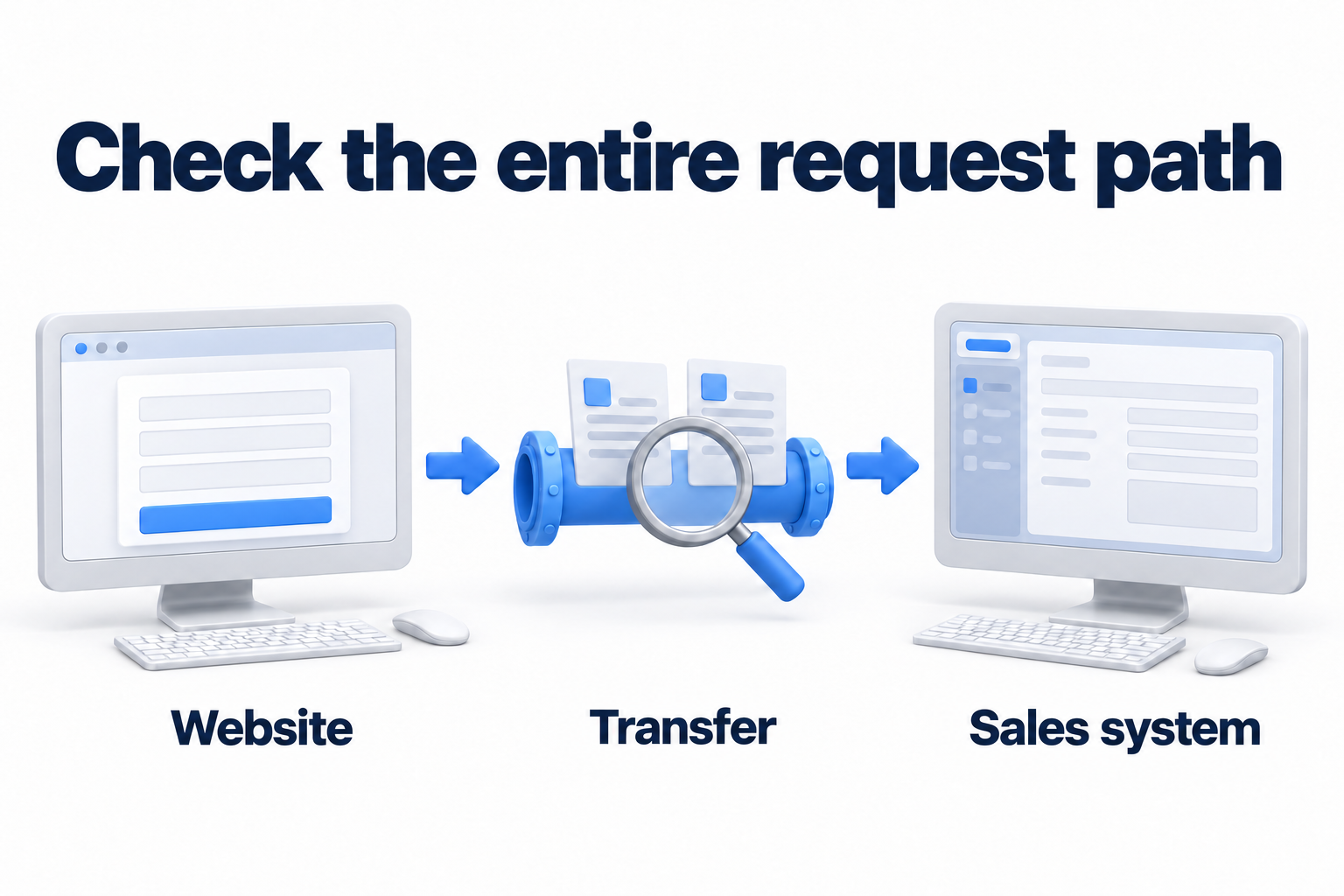
Composition: employees, a cloud sales system from provider A, a website in provider B's cloud, and request exchange between the website and sales system. This is multicloud. Two providers alone do not establish hybrid cloud. That requires separate cloud infrastructures connected through mechanisms for data and application portability.
Check the exchange owner, data format, interface limits, and error handling. If the website is available but requests never reach the sales system, a working status for both platforms does not achieve the business task. Monitor the transfer outcome.
A private cloud and two public providers
Composition: the company's private cloud, public cloud A for an application, public cloud B for a separate analytics task, and agreed data transfer connections. If the infrastructures connect through mechanisms for data and application portability, the design combines hybrid cloud and multicloud.
A small team needs a strong reason for this design. For example, an existing system may require a private environment while two cloud services meet different confirmed requirements. If a cloud must handle peak load, check application compatibility, available capacity, quotas, and timely data transfer. Resource growth does not happen by itself. Wanting independence from one provider does not prove that the team can support both platforms and move the workload between them.
Check connections, access, and responsibility
Map data flows and failure points
For every connection, specify the sender, recipient, data type, exchange frequency, and acceptable interruption. Separate business traffic, user sign in, administrative access, and monitoring. They may use different routes and have different failure consequences.
Then ask what happens if the connection, account directory, or application interface becomes unavailable. Define the queue of unprocessed operations, retry process, and method for detecting missing transfers. Measure a real operation under expected load across the entire exchange path. A second provider does not guarantee lower latency. A connection between platforms does not guarantee correct data exchange.
Coordinate sign in and the access lifecycle
Define the account source, group owners, and access removal process. If some systems do not support single sign on, include their separate accounts in hiring, role changes, and departure processes. Single sign on support does not mean identical roles across every service.
Separate everyday work from administrative actions. Check multifactor authentication, integration accounts, secret expiration, and a controlled method for recovering administrative access. Do not combine every permission in one account for convenience.
Assign an owner for the entire service
Each platform may meet its own commitments while the overall process remains broken. Assign someone who owns the whole problem and coordinates the local team, providers, and connectivity operator. Record contacts, responsibility boundaries, and the escalation process in the service record.
Service type affects how work is divided. With a virtual machine, the company may own the guest system and application. With a ready to use cloud application, it may manage access and settings. Cloud services do not remove responsibility for data and accounts. Check the work scope in the chosen service's documentation and contract, rather than relying on the word multicloud.
Assess portability and resilience without promises
A second provider does not remove dependence on the first
An application may depend on a platform's interfaces, database format, identity service, and licenses. A container simplifies packaging part of the application, but it does not make an external database or access permissions identical across clouds. Test portability of the entire working chain.
Describe the exit path: which data you can export, in what format, who can access the export, and where the application will run afterward. Verify restored connections and user work. If migration remains untested, record it as a limitation rather than a ready capability.
Different clouds do not replace a recovery plan
If email runs with one provider and a website with another, the website does not become an email recovery system. Running the same workload on another platform requires a compatible application, current data, access, routing, and a tested failover procedure. A shared identity or connectivity provider may remain a single point of failure.
Record the required result during a failure and confirm it through testing. A detailed disaster recovery plan and backup location choices are separate tasks. Identify which dependency needs that plan and who maintains it.
Calculate the cost of added complexity
Bring costs and monitoring into one view
Add data exchange, connections, management tools, licenses, support, and specialist time to provider bills. An individual service's benefit may disappear once integration is included. Data transfer terms vary by service and route. Calculate actual flows, rather than only storage volume.
Use common labels for resource owners, purposes, and environments where possible. Consolidate costs by business service and monitor deviations. A shared tag does not remove differences between two platforms' bills and rules.
Check the limits of a shared management dashboard
A unified dashboard helps when it shows the resources and events you need. Check its scope: supported platforms and operations, data freshness, and behavior when connectivity fails. Some updates, investigations, and settings may still require the provider's own tools.
Monitor the business process, not just servers. For order exchange, visibility into successful transfers, queues, and errors is useful. Define who receives alerts, who checks them, and how the team distinguishes stale dashboard data from a healthy system.
Agree on rules before automating repeated actions
A small company does not always need a separate orchestration platform. First define rules for provisioning resources, verifying changes, and removing unwanted components. Then choose a tool that reduces manual work at your scale. Automation without a common rule will simply reproduce inconsistent settings faster.
For each automated action, define permissions, a result log, and a rollback process. Check who maintains the workflow when the provider changes its interface and who can perform the task if the tool fails. A dedicated development team, containers, and complex orchestration should follow application requirements. They are not mandatory features of multicloud.
Complete the checklist before adding a provider
|
Question |
What to record |
|---|---|
|
Which task the new service solves |
A requirement the current environment cannot meet |
|
Which systems depend on each other |
A map of data flows, sign in, and administrative access |
|
Which data crosses environments |
Data types, routes, and permitted processing locations |
|
What works without external connectivity |
Available functions and the process for returning to operation |
|
Who grants and revokes permissions |
The process owner and a list of separate accounts |
|
Who owns the overall outcome |
The service owner and participant contacts |
|
How portability has been verified |
A test result or an explicit limitation |
|
What happens if a provider fails |
An operating scenario and a separate recovery requirement |
|
How errors and costs are visible |
Event sources, owners, and cost components |
|
Whether the team has enough capacity |
Required skills, backup staffing, and support scope |
|
How to exit the service |
Export formats, access, timing, and termination terms |
Translate data constraints into specific requirements: permitted processing locations, staff access, logs, and support conditions. Local deployment or a private cloud alone does not prove compliance. Check applicability across the entire system and the company's current obligations.
After completing the checklist, assign an owner and a decision condition to each open question. If a new service is needed for only one function, test that function with real data exchange and user access. Decide on expansion after verifying the result, rather than watching a general platform demonstration.
Choose the environment for a confirmed task
First describe applications, providers, and dependencies. Then identify where integration is needed and which capabilities the team can support. A hybrid environment connects required components, while multicloud adds a choice of services from different providers. A working process with clear owners and limits demonstrates the benefit.
To assess existing connections and management requirements, discuss cloud and hybrid infrastructure with DKs. Start with a list of systems, providers, and problematic dependencies.