
How much does IT support cost, and how do you compare quotes?
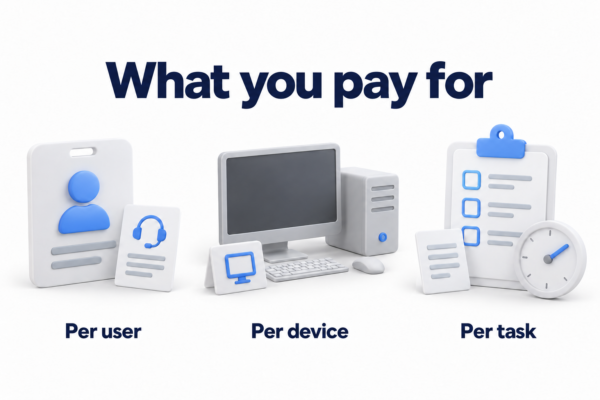
IT support costs depend on the systems covered, scope of work, and support schedule. A rate per user alone does not show the monthly budget. You need to know who…
IT vendor management: services, deadlines, and responsibility
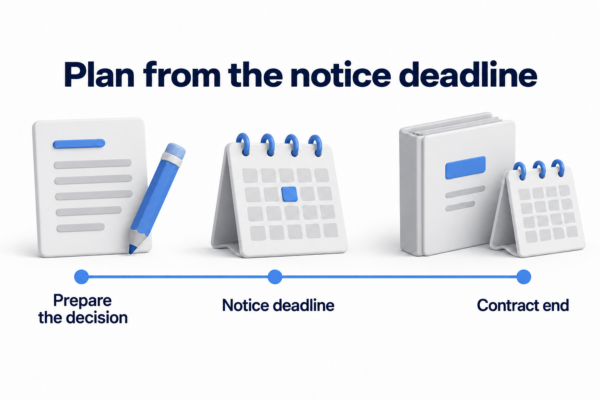
An application may depend on a connectivity provider, cloud platform, developer, and internal team at the same time. During an outage, each sees only its own part. Without a shared…
How much bandwidth does VoIP need?
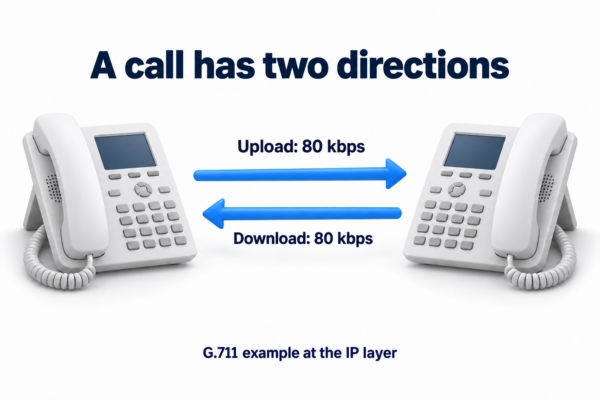
Calculate VoIP bandwidth from simultaneous voice streams, their codec, and network overhead. Employee or phone number counts do not replace those inputs. Check upload and download separately, then add other…
Cat6 or Cat6A: which cable should an office choose?
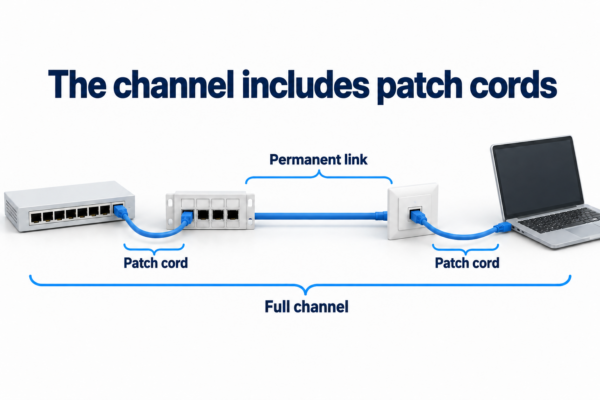
The main difference between Cat6 and Cat6A in an office project appears at 10 Gbps. Cat6A supports this speed over a channel up to 100 m. Cat6 requires a shorter…
Network segmentation: plan zones and verify access
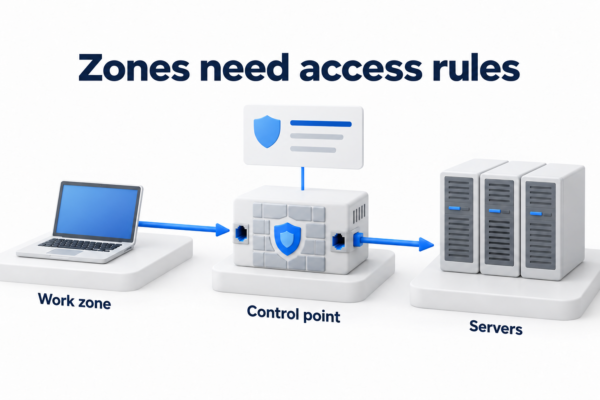
Network segmentation limits which devices and services can communicate. A compromised workstation should not automatically gain access to servers, backups, or equipment management. Drawing separate zones is not enough. Technical…
Server hardening: a practical checklist
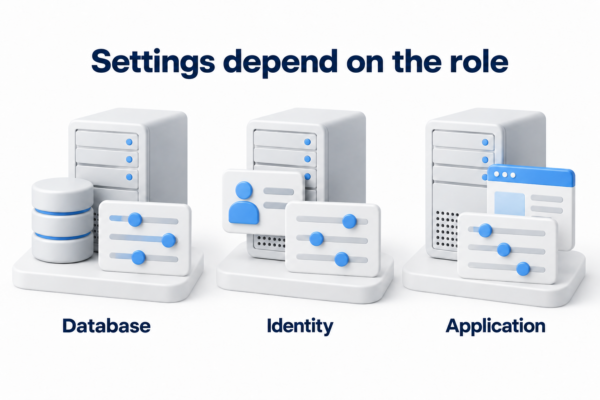
A server needs only the services, permissions, and connections that support its role. Security hardening removes unnecessary capabilities and establishes a secure configuration. The goal is to reduce the attack…
How to prioritize vulnerabilities and assign remediation
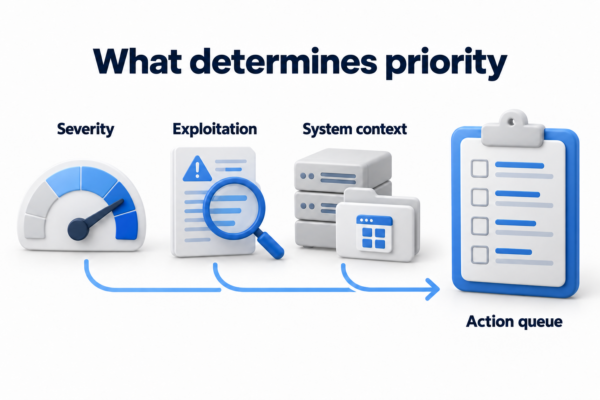
A report may contain hundreds of findings, while the team can verify and fix only some during one work cycle. Sorting by the highest score does not explain what threatens…
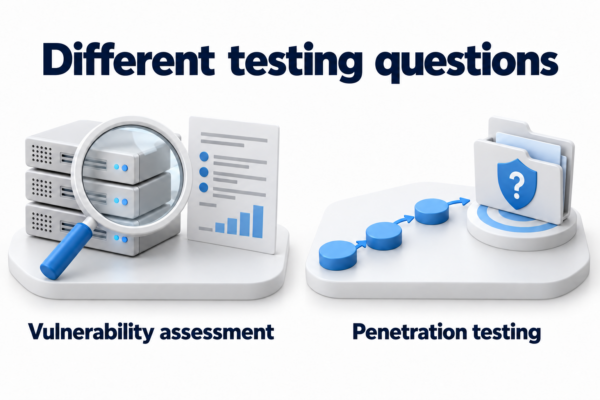
Vulnerability assessment and penetration testing: differences and how to choose
A vulnerability assessment helps find and analyze weaknesses across an agreed set of systems. A penetration test checks whether weaknesses can be used to achieve a specific goal, such as…
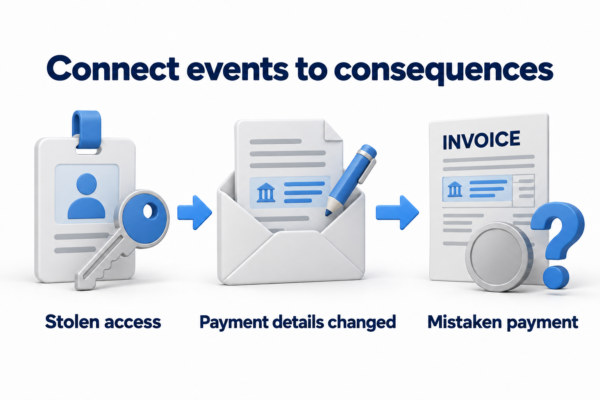
Cyber risk assessment: how to build a register and make decisions
A list of weak passwords, old software, and untested backups does not yet explain what the company could lose. Cyber risk assessment connects these facts to business processes: interrupted sales,…
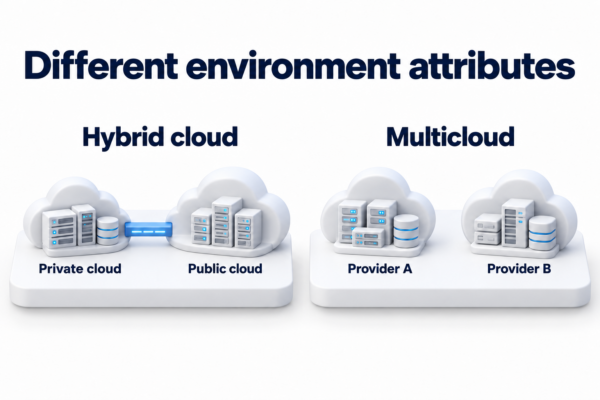
Hybrid cloud and multicloud: what is the difference?
Hybrid cloud describes connections between different cloud environments. Multicloud means using services from at least two cloud providers. These attributes can coexist. A company can connect a private cloud to…
Cloud or local infrastructure: how to choose where a system runs
Choose a location for a specific business system, rather than making one decision for the entire company. Email, a production application's database, and file storage may have different requirements. Start…
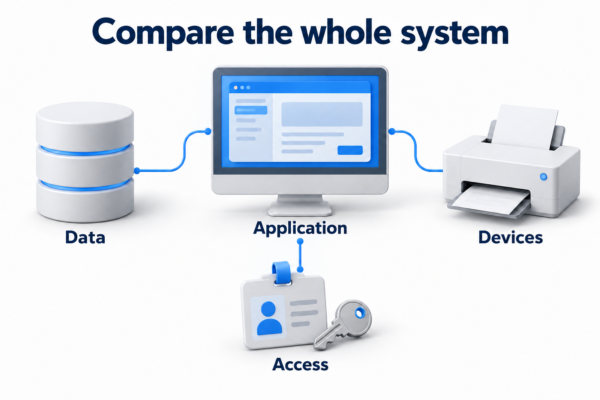
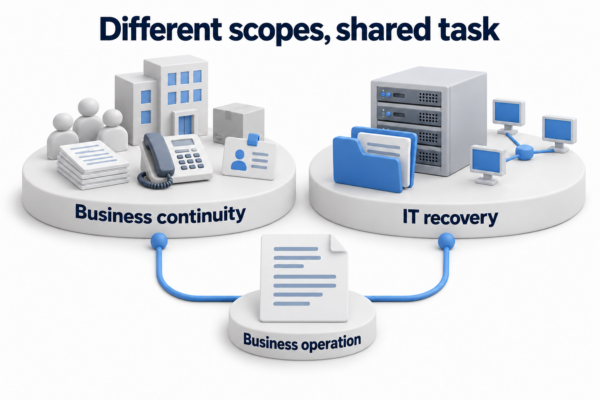
Business continuity and disaster recovery: what is the difference?
Business continuity asks how to maintain important operations when normal conditions break down. IT disaster recovery asks how to restore the required systems, data, and technical dependencies. These tasks are…
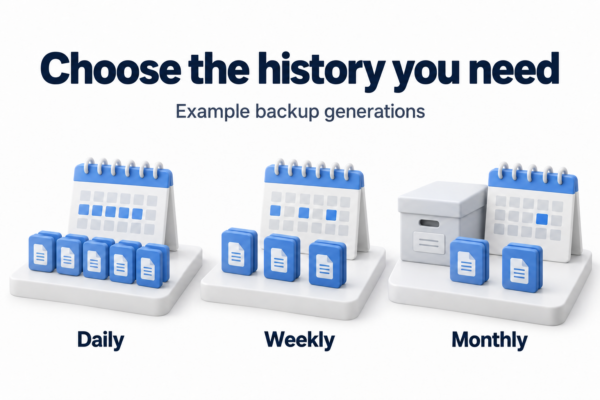
Backup retention policy: how to choose retention periods and deletion rules
A backup retention policy defines which data states remain available, how long you keep them, and what happens when retention ends. Its purpose goes beyond saving space. A history that…
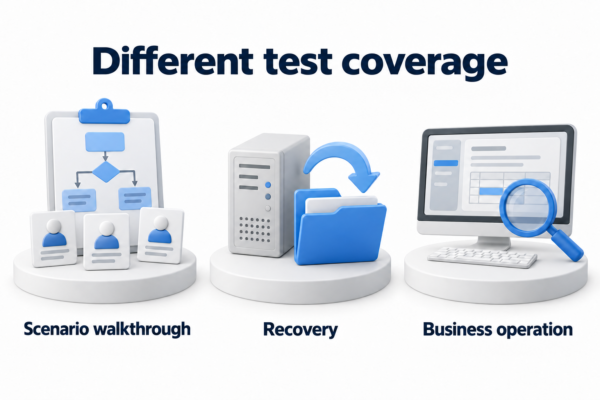
How to test disaster recovery and document the result
A disaster recovery test answers a practical question: can the team restore the required business operation under agreed conditions? A backup, document or recovery site does not yet answer it.…
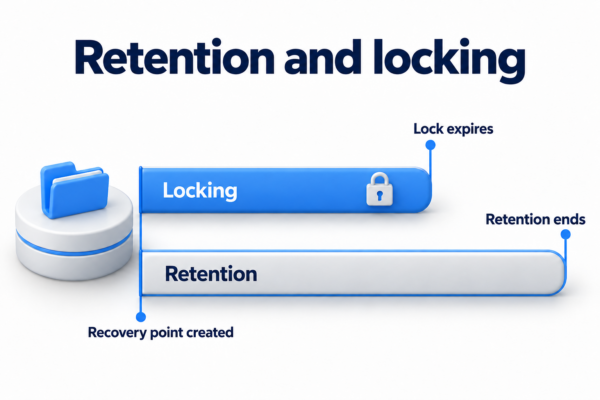
Immutable backups: protection, limits and testing
An immutable backup is protected against certain changes and deletion for a defined period. This protection matters when an administrative mistake or attack could affect both working data and ordinary…
The three two one rule: how to separate backups
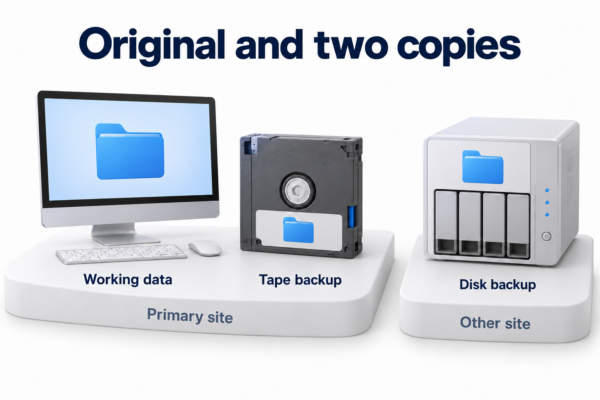
The three two one rule helps check whether all data protection depends on one location or device. Its classic wording is simple: three copies of the data, two different media…
RPO and RTO: how to set business recovery objectives
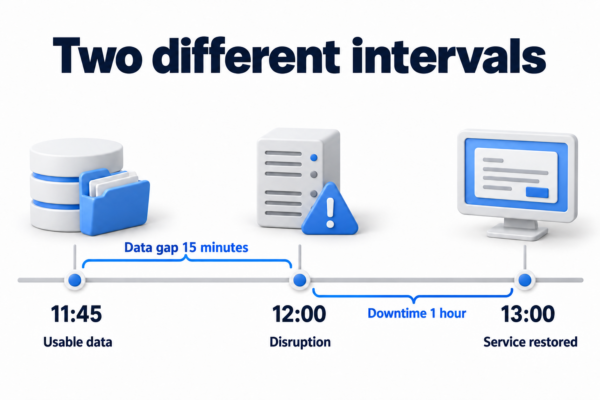
A backup may exist while the business still cannot resume work. Its data may be too old. Or recovery may finish later than employees and customers can wait. To manage…
Shared mailbox or distribution list: how to choose
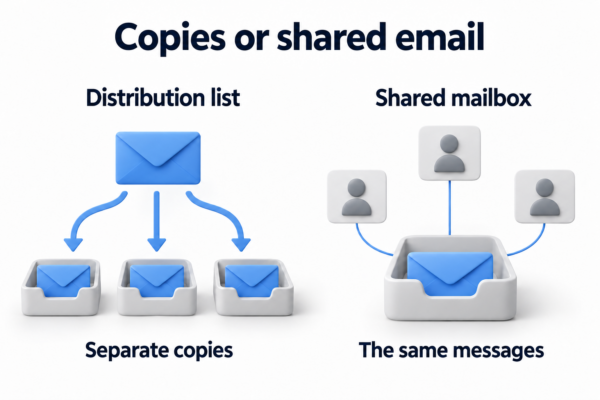
One address can support different ways of handling email. A distribution list delivers a message to its members; a shared mailbox gives the team access to the same mailbox. Choose…
IT asset inventory: what to include and how to maintain the register
An IT asset register shows which equipment and software help the company work. It links a device to its user, a service to its owner and a license to its…
New employee onboarding: an IT checklist
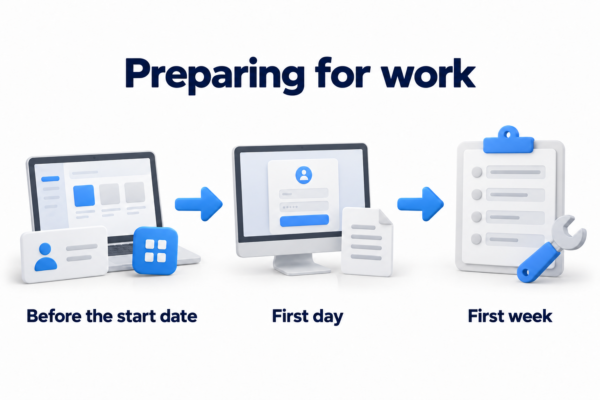
On the first day, an employee needs a working computer, access to the right systems and a clear way to get help. IT onboarding covers issuing equipment, setting up accounts…
Google Just Rebuilt Search Around AI. The Web Will Not Work the Same Way Again
For more than two decades, Google Search followed a familiar pattern: type a query, scan the links, click a result, and continue somewhere else. That routine shaped the open web.…
DMARC Policy: A Complete Guide to Implementation, Configuration, and Monitoring
Source and accuracy note This guide is built primarily on the protocol specifications themselves — RFC 7489, RFC 7208, RFC 6376, RFC 8301, RFC 8463, RFC 8601, RFC 8617, RFC…

Microsoft 365 Is Not a Backup
Your Emails Are in Microsoft 365. Your Files Are in OneDrive. So Why Does Microsoft Say Your Data Is Your Problem? If you run your business on Microsoft 365 —…

Your IT Person Just Put In Their Two Weeks
Your IT Person Just Put In Their Two Weeks. Here’s What That Actually Means for Your Business. There’s a moment that happens in small offices all the time — maybe…

The Hidden Timeline of a Phishing Attack: What Happens After the Click
Your Employee Just Clicked a Phishing Email. Here’s What Happens Next. It’s a Tuesday afternoon. Your front desk coordinator, Jessica, gets an email that looks like it’s from your EHR…

What Cybersecurity Controls Should Regulated SMBs Implement First?
What Cybersecurity Controls Should Regulated SMBs Implement First? For regulated small and midsize businesses, the first mistake is usually treating cybersecurity as a tool-buying exercise. The stronger approach is to…
Brand Refresh and Website Redesign
DK’S Enterprises, Ltd. has completed a full brand refresh and website redesign. This update includes a modernized logo, refined visual identity, and a rebuilt website structure. After 27 years in…
Network & Telecom Services as Critical Business Infrastructure
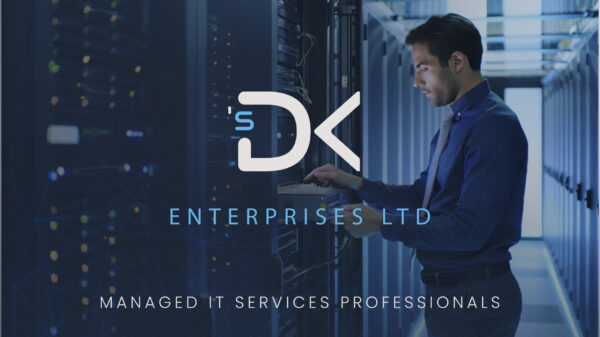
A comprehensive map of a modern enterprise network infrastructure. Network and telecommunications services form the technical backbone of modern business operations. Every digital process – data exchange, cloud access, voice…
Managed IT Services as a Foundation of Modern Business Operations
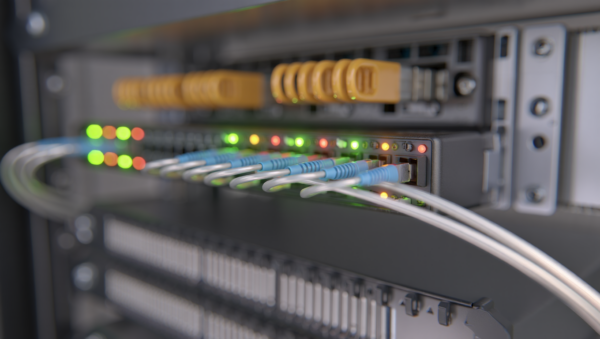
Managed IT Services represent a systematic approach to operating, maintaining, and improving an organization’s information technology environment through an ongoing service model. According to definitions summarized in Wikipedia and supported…

Structured Cabling Systems for Modern Business Infrastructure
Structured cabling is the physical foundation of every reliable IT environment. Regardless of how advanced servers, cloud platforms, or software systems may be, they all depend on a stable, well-designed…

27 Years of DK’S Enterprises, Ltd.
27 Years of DK’S Enterprises, Ltd. On January 1, 2026, DK’S Enterprises, Ltd. reached an important milestone — 27 years in business. Founded in 1999, the company began with a…

Server and Cloud Backup Solutions for Business
For modern businesses, data is a core operational asset. Financial records, customer information, intellectual property, operational systems, and communication platforms all depend on the availability and integrity of digital data.…
Founded in 1999