An application may depend on a connectivity provider, cloud platform, developer, and internal team at the same time. During an outage, each sees only its own part. Without a shared owner, the issue moves between support teams and the company cannot tell who takes the next step. IT vendor management links services, contracts, contacts, and actions before a problem occurs.
The practical result is a vendor register, a calendar of contractual decisions, and a process for working together during outages. This article covers existing technical vendors for connectivity, cloud, applications, equipment, and support. Selecting new products and purchasing need a separate process. Daily management starts with knowing which service the company receives and who owns its condition. Use the tables below as templates and adapt them to your contracts and services.
Build a register of vendors and related services
Reconcile contracts, invoices, subscriptions, support records, and information from application owners. Look beyond companies paid by IT. A department may buy a service whose access depends on a shared business account. Identify direct vendors and significant dependencies behind them where they affect availability, data, or transfer of control. For an unknown subscription, assign an ownership check before deciding whether to renew or disconnect it.
Assign each vendor an ID and link it to services and assets. One vendor may have several contracts with different contacts and dates. Keep the relationship terms and service management details in the vendor register. Device serial numbers, full software lists, and equipment discovery belong in the asset register. Linked IDs and references to the relevant records are enough here.
|
Register field |
What to record |
How to use it |
|---|---|---|
|
Vendor and service |
ID, legal name from the contract, service name, and contract or subscription number. |
Distinguish the relevant contract from other services provided by the same company. |
|
Internal owner |
Owner of the business need and service decision, technical contact, and deputy. |
Assign a decision rather than sending the issue to an undefined “IT” group. |
|
Vendor contacts |
Support channel, account number, and normal and emergency escalation paths. |
Open a case at the right service level without searching personal messages. |
|
Scope and dependencies |
Inclusions, exclusions, related applications, assets, other vendors, and business processes. |
Understand where one service ends and another begins. |
|
Access and data |
Data processed, permissions and connections granted, and access approver. |
Review the need for permissions and change vendors safely. Do not store passwords in the table. |
|
Contract dates |
Start, end, renewal, notice deadline, and the clause defining the condition. |
Prepare a decision before a contractual event becomes irreversible. |
|
Cost and support |
Billing period, actual scope, agreed metrics, and support limits. |
Compare invoices and quality with what was actually ordered. |
|
Exit and recovery |
Account owner and the process for obtaining data, replacing the service, and ending access. |
Assess vendor dependence before an urgent transition becomes necessary. |
Store the register and contracts with managed permissions, version history, and backups. Owners need current information, but access and security details should not be available to everyone. A shared table with an assigned owner may be enough for a small team. A dedicated system helps when dates, document versions, and tasks otherwise get lost. Buying a platform alone does not establish a management process.
Separate decisions from technical coordination
The service owner confirms the need, budget, and acceptable result. The technical coordinator gathers information, manages the case, and tracks dependencies. Procurement or an assigned participant handles contractual actions within their authority. Each task needs one accountable owner, with participants and approvers listed separately. Assign a deputy for important services and confirm that contacts work without one employee's personal account. Handing over control when an internal specialist leaves requires a separate review of access and documentation.
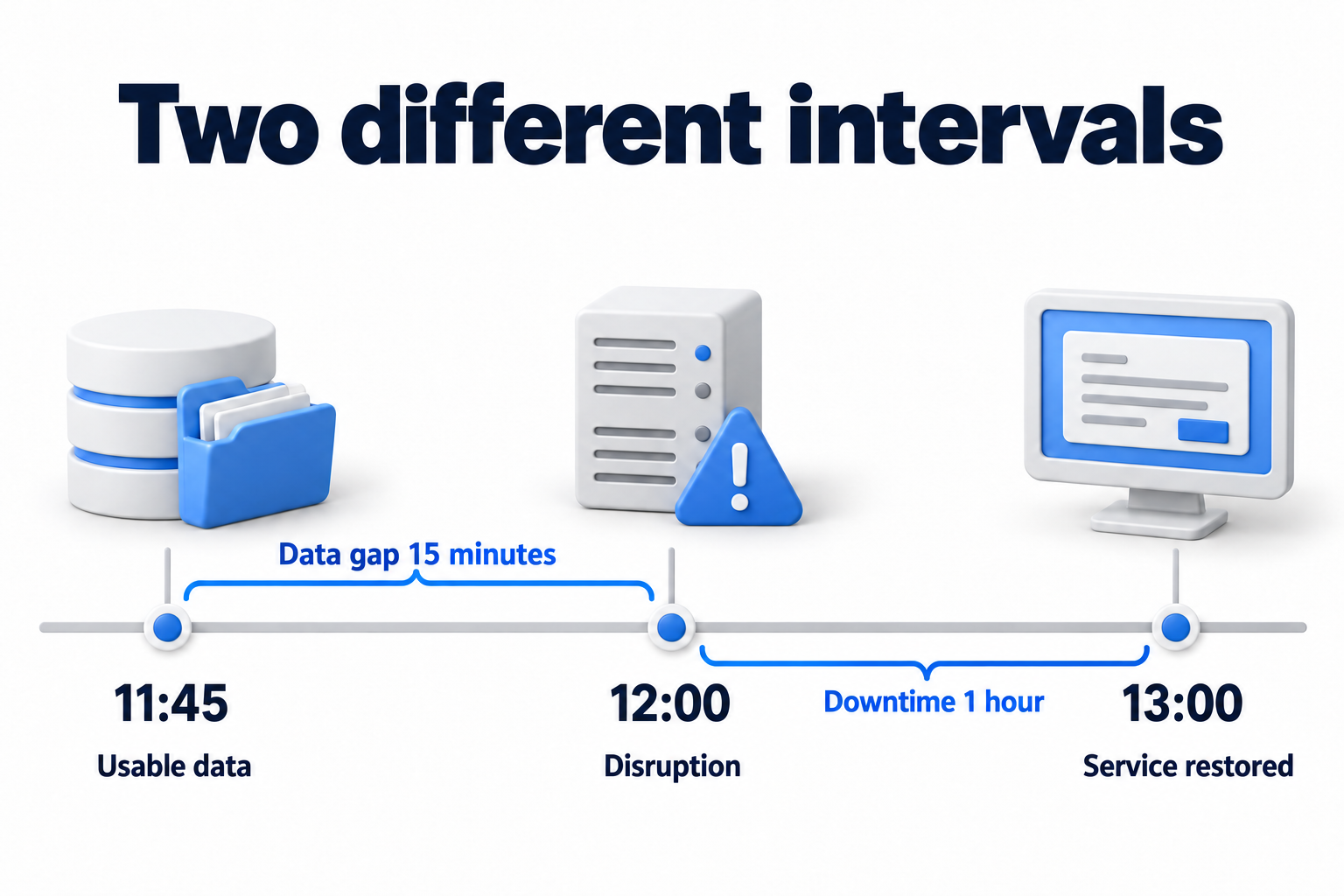
Turn the contract into working instructions: what support covers, how to open a case, service hours, and how urgency is determined. Distinguish acknowledgment, the start of a response, service restoration, and final resolution of the cause. These are different events. Take SLA values and exclusions from the signed contract, and agree on internal expectations separately. Do not promise a department a restoration time the vendor has not accepted.
Check that vendor access matches current tasks. Include service accounts, remote connections, cloud roles, and data held by the vendor. Security and incident notification arrangements need clear contacts and procedures. A longstanding relationship, familiar brand, or small contract value does not replace verification.
Choose the depth of review based on data access and the impact of an outage. For a critical service, request evidence of protection, recovery, and significant limitations. Compare vendor claims with documents and test results relevant to that service. A certificate or report covering something else does not confirm the state of your service. Active testing of another party's system needs separate authorization and agreed conditions.
Review service results, not just the existence of a contract
Agree on a review period based on service criticality and contract terms. Before the meeting, gather cases, actual disruption durations, recurring causes, completed changes, invoices, and user feedback. Separate vendor delays from internal waits for approval or access. Compare periods using the same metric definitions, service hours, and exclusions.
- Does the company receive the agreed service, and does it still need the same scope?
- Which cases recur, where have agreed terms been breached, and what evidence confirms the cause?
- Are there unnecessary subscriptions or overlapping functions? A backup connection may be intentional, so matching names alone do not prove waste.
- Have data access, service location, critical dependencies, or the vendor's ability to support the service changed?
- What actions does each party need to take, who owns them, and when will the result be checked?
For a critical dependency, test an alternative way of working and the ability to transition. Several vendors do not guarantee independence. They may share a connection, data center, or component. Assess external events and the vendor's condition to the extent relevant to the service. Do not turn every routine discussion into a full financial or legal audit. Refer a significant risk to the process owner for a separate decision.
Base the calendar on contract terms
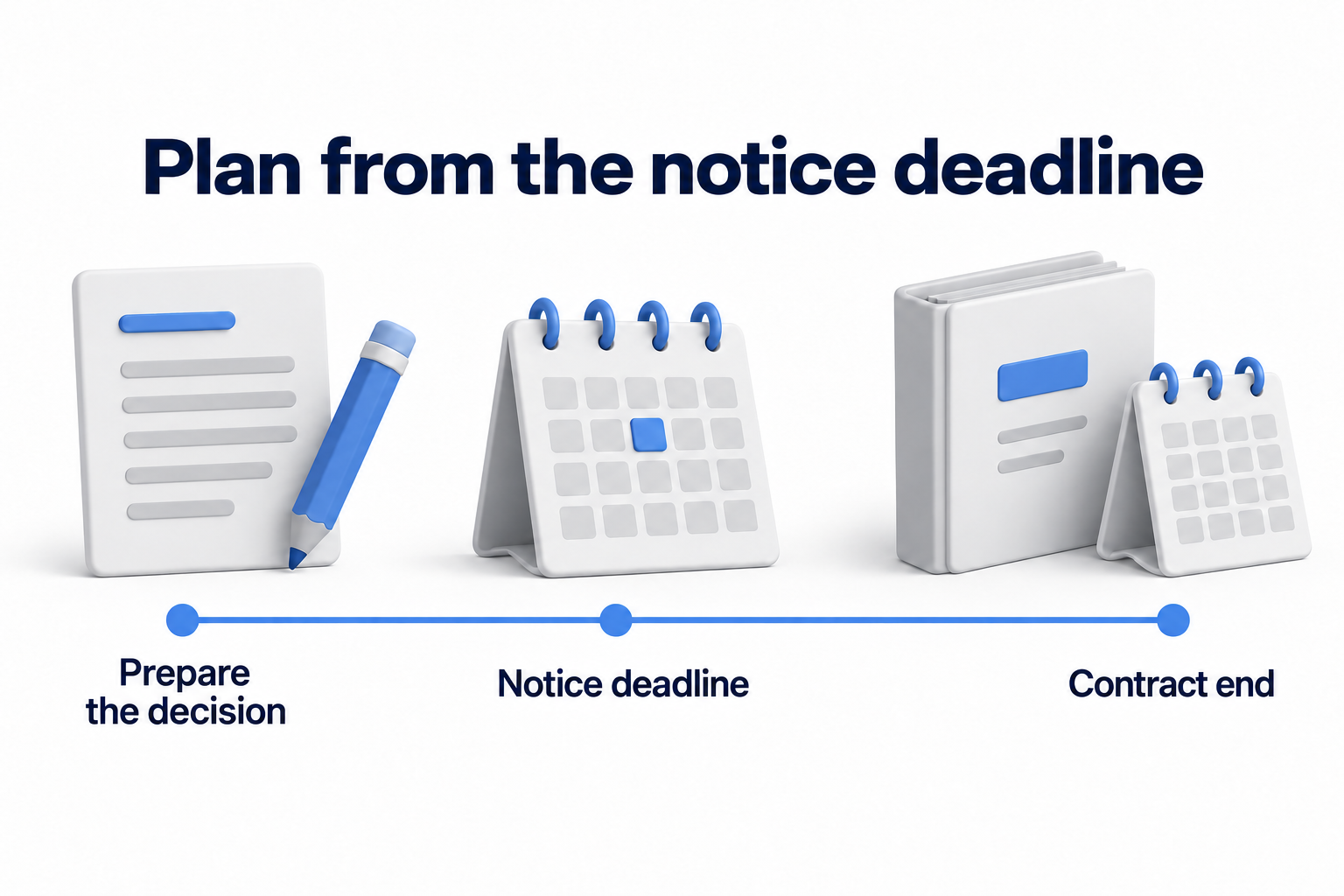
Plan backward from the notice deadline rather than relying only on the end date. Allow for internal approval, procurement, data migration, and testing the replacement. Set reminder timing from the specific contract and preparation time required. If the renewal condition is not yet known, assign someone to clarify it. Do not enter an assumed date.
|
Event |
What triggers preparation |
Owner |
Result |
|---|---|---|---|
|
Review of an important service |
Agreed frequency, plus a significant outage or change outside the schedule. |
Service owner. |
Decisions and tasks with implementers, deadlines, and verification criteria. |
|
Renewal or cancellation |
The contractual notice deadline, allowing time for an internal decision. |
Authorized owner of the contractual action. |
Record the decision, send notice through the required channel, and confirm receipt. |
|
Access review |
A change in participants or the vendor's task, or a scheduled review. |
Access owner. |
Confirm required permissions, remove unnecessary permissions safely, and retain evidence. |
|
Dependency and exit review |
A change in criticality, a significant risk, or a scheduled readiness check. |
Service continuity owner. |
Verify contacts, data retrieval, and a realistic way to continue operations. |
|
Warranty and end of support |
The actual support term for equipment or a product, plus the time required for replacement. |
Owner of the relevant asset. |
Decide on maintenance, replacement, or a limited exception. |
Assign one coordinator for problems involving several vendors
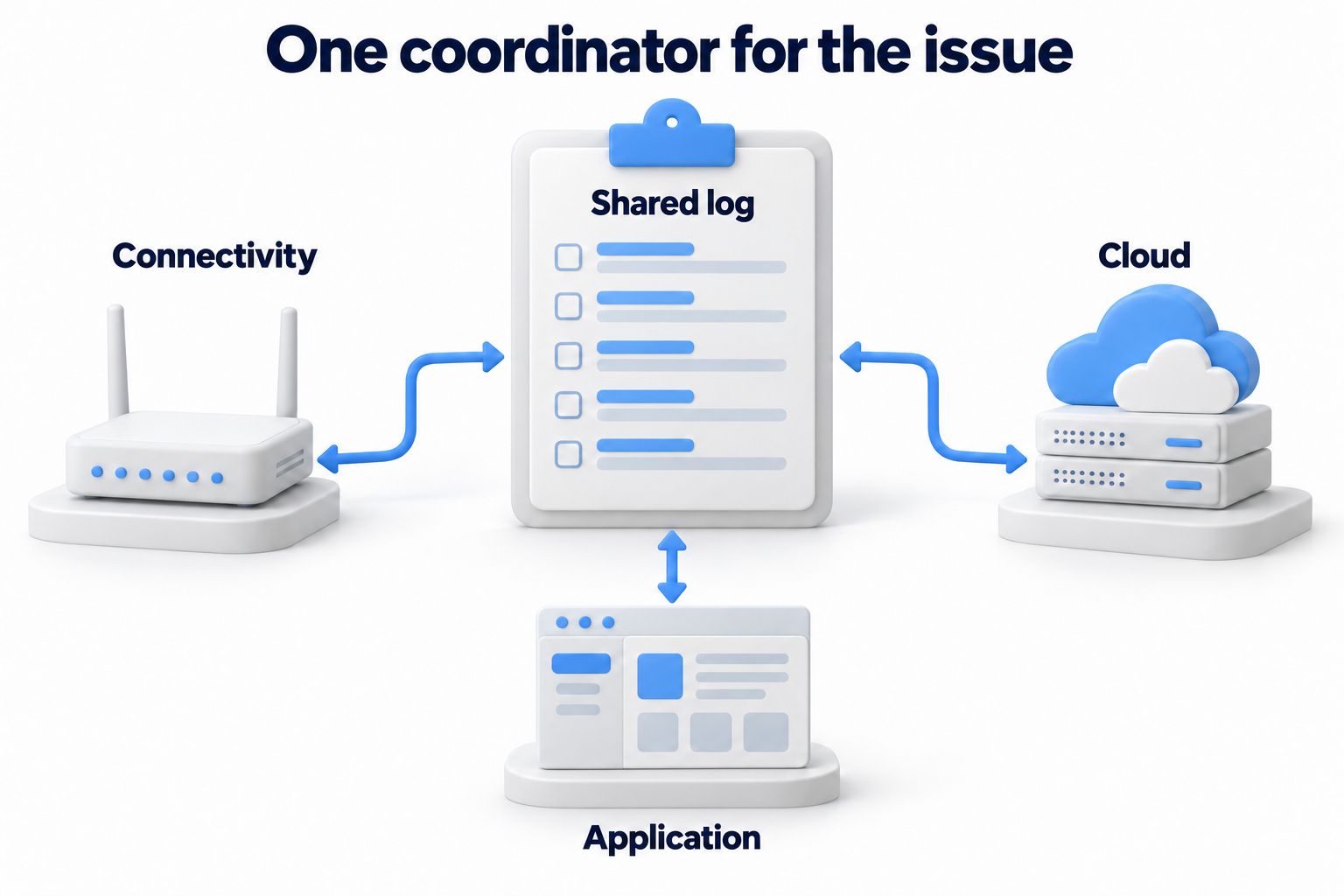
If an application is unavailable, first record the impact, start time, affected operations, and verified facts. Assign one coordinator for the overall case. Each support team retains its responsibilities, but the shared log must show case numbers, owners, the next step, and the next update time. If there are signs of a security incident, follow the agreed response and evidence preservation process.
|
Participant |
Review area |
What to provide to the coordinator |
Responsibility boundary |
|---|---|---|---|
|
Internal team |
The state of work devices and the local network, and the confirmed scope of the problem. |
Time, affected users, results of safe checks, and recent changes. |
Do not assign blame without evidence or change another party's system without agreement. |
|
Connectivity provider |
The ordered connection and the relevant part of the service. |
Case number, connection state, confirmed events, and next step. |
A working connection alone does not prove application health. |
|
Cloud or infrastructure vendor |
Platform and components within the contractual scope. |
Resource state, limitations, and required actions from the other party. |
Platform support does not always include application configuration. |
|
Application vendor |
The application service and its dependencies within the agreed scope. |
Application errors, triggering conditions, required data, and test plan. |
A request to change the network or permissions needs a reason and an approver. |
|
Overall coordinator |
The connection between checks and sequence of actions. |
Shared log, open questions, task owners, and business updates. |
Coordination does not transfer every vendor's obligations to one participant. |
Escalate with a specific request: which contradiction needs resolution, which fact is missing, and who must respond. Arrange a joint discussion where needed to avoid circulating different versions of the problem. Do not broaden access or security rules simply because support asks to “open everything.” A change needs a purpose, approval, testing, and a rollback method.
Close the overall issue after confirming the required business operation, rather than simply after one vendor closes a case. Record the cause, completed actions, remaining limitations, and owner of recurrence prevention. If the cause remains unknown, retain it as an open question with an assigned action. Do not substitute an invented explanation.
Prepare to change vendors before the service ends
Check the company's rights to manage its accounts, domains, numbers, data, and documentation under the contracts. Define the handover process and a safe overlap period. Obtain required exports, settings, and dependency information, then check data readability and operation of the new service. An export file alone does not confirm that the process can continue.
After verifying the transition, remove unnecessary roles and connections belonging to the previous vendor. Replace shared secrets if the vendor knew them, and confirm that this has not broken required integrations. Clarify data retention or deletion under the contract and applicable requirements, and obtain the specified confirmations. Separately check that billing stops and no unexpected renewal occurs. Close the register record with a decision history rather than deleting it without a trace.
You can start with one critical service. Complete its record, verify support contacts and the contractual date, assign an owner, and review one recent outage. Then apply the same process to other dependencies. The register, calendar, and case log help only when updated after real changes.
If a technical issue stalls between several support teams, discuss coordination with DKs on the IT Vendor Relations page. Prepare the contractual scope, case numbers, and facts already verified.